Share this post
Planning a trip to Dubai is exciting, whether it’s for a holiday, business meeting, or family visit. However, one of the biggest frustrations travelers face is getting their visa application rejected. Many people assume visa rejection is rare, but in reality, a large number of applications are denied every year due to simple and avoidable mistakes.
The important thing to understand is that Dubai visa rejection is not random. In most cases, it happens because of incorrect information, missing documents, or failure to meet basic requirements set by the United Arab Emirates immigration authorities. If you know the reasons in advance, you can easily avoid them and ensure your visa gets approved without delay.
This complete 2026 guide explains the most common Dubai visa rejection reasons and provides practical solutions to help you apply correctly the first time.
Dubai visa rejection occurs when your application is reviewed and denied by UAE immigration. This decision is usually based on discrepancies in your application, incomplete documentation, or concerns about your travel intent. Once a visa is rejected, you cannot travel until you correct the issue and reapply successfully.
For many applicants, rejection is not just disappointing but also costly and time-consuming. Since visa fees are generally non-refundable, a rejected application means both financial loss and delayed travel plans. That’s why it is essential to understand the process and submit a flawless application.
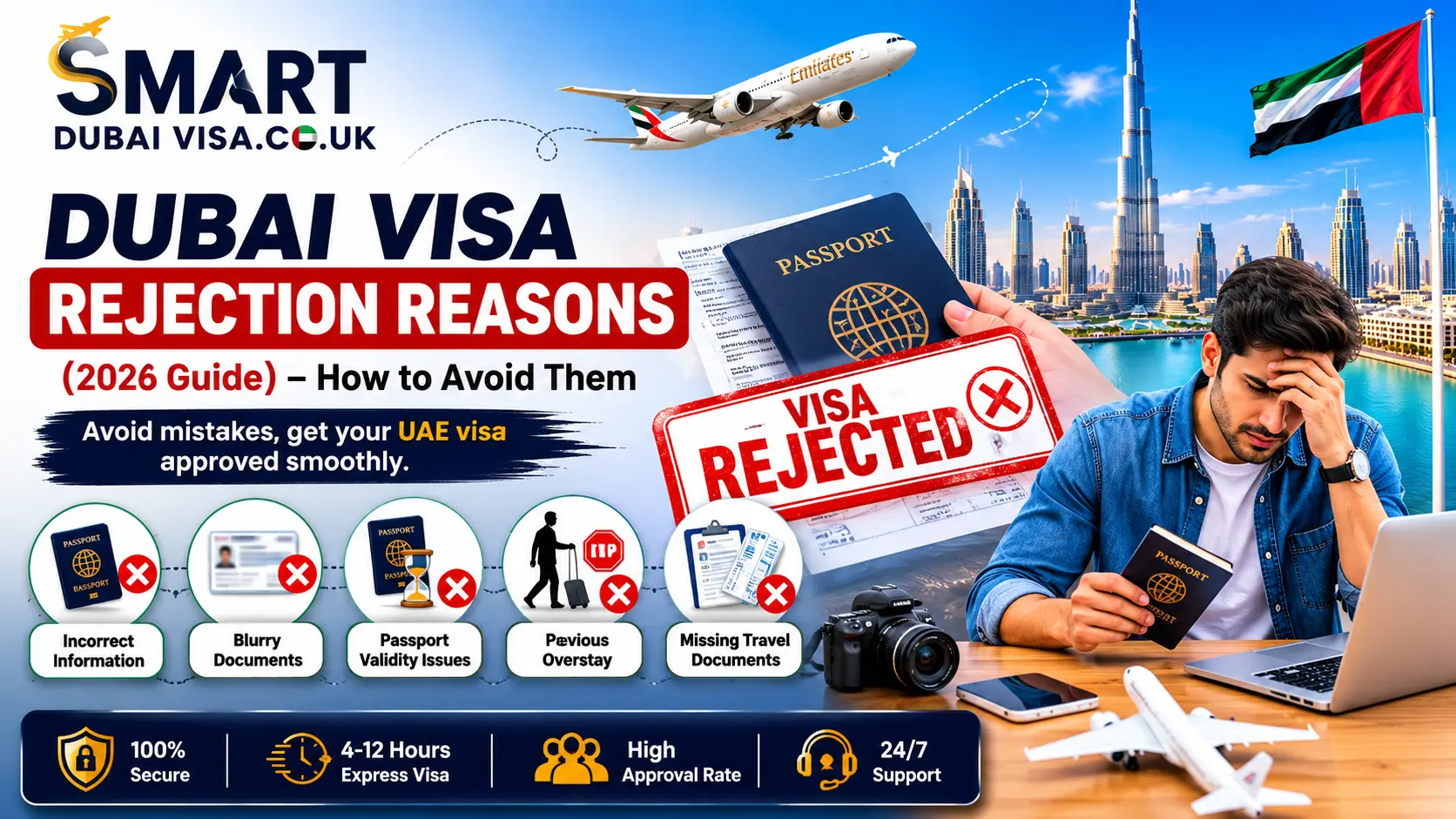
One of the most frequent reasons for visa rejection is incorrect or incomplete information in the application form. Even a small spelling mistake in your name or passport number can create a mismatch with official records, leading to rejection. Immigration systems are very strict, and they require exact matching of details as per your passport.
Another major issue is submitting unclear or invalid documents. Many applicants upload blurry passport scans or low-quality photographs, which makes it difficult for authorities to verify identity. In such cases, applications are often rejected without further clarification. Ensuring that your documents are clear, properly scanned, and meet the required format is extremely important.
Passport validity is another critical factor. If your passport has less than six months of validity remaining from your planned travel date, your visa will likely be rejected immediately. This is a strict rule followed by the UAE, and there are no exceptions.
Previous travel history can also impact your application. If you have overstayed a previous UAE visa or violated immigration rules, your new application may be denied. Authorities keep records of past visits, and any negative history can reduce your chances of approval.

Security concerns also play a role in visa decisions. Applicants with criminal records or suspicious travel patterns may face rejection due to strict UAE security policies. While this does not apply to most travelers, it is still an important factor.
In some cases, demographic factors such as age and travel status may lead to additional scrutiny. For example, unmarried female applicants under 25 traveling alone may be asked for additional documentation. While this does not guarantee rejection, it can affect approval chances if not handled properly.
Another common mistake is submitting multiple applications through different agents at the same time. This creates duplicate records in the system, which can confuse immigration authorities and result in automatic rejection. It is always advisable to apply through a single trusted platform.
Profession and financial background may also influence visa approval. Applicants in certain job categories or with limited financial proof may face additional checks. While this does not mean automatic rejection, incomplete information in such cases can lead to denial.
Finally, missing travel details such as return tickets or hotel bookings can weaken your application. Immigration authorities want to ensure that you have a clear travel plan and intend to leave the country after your visit.
A visa rejection can have multiple consequences beyond just delaying your trip. It can disrupt travel plans, cause financial loss, and create stress, especially if your trip is urgent. In some cases, repeated rejections can also affect your future visa applications, making it harder to get approval.
Because of these risks, it is always better to invest time in preparing a strong application rather than rushing through the process.
The best way to avoid rejection is to ensure accuracy and completeness in your application. Start by carefully filling out the application form and double-checking all details before submission. Your name, passport number, and other personal information must match your passport exactly.
When uploading documents, make sure they are clear, properly scanned, and meet the required specifications. Avoid using mobile photos with shadows or blur. High-quality documents significantly increase your chances of approval.
It is equally important to check your passport validity before applying. If your passport is close to expiry, renew it first and then proceed with the visa application.
If you have any previous travel issues, such as overstays, it is advisable to resolve them before applying again. Providing accurate information and being transparent about your travel history can help avoid complications.
Choosing the right visa type is another key factor. Many applicants make the mistake of applying for the wrong visa category, which leads to rejection. Understanding whether you need a tourist visa, transit visa, or multiple-entry visa is crucial.
Providing complete travel details also strengthens your application. Including hotel bookings and return flight tickets shows that you have a clear plan and intend to follow immigration rules.
One of the most effective ways to avoid rejection is to apply through a reliable visa service. Professional platforms review your application, check for errors, and ensure that all documents meet the required standards. This greatly reduces the chances of rejection.
Many visa rejections happen because applicants try to handle everything themselves without proper knowledge of the process. A professional visa service can guide you at every step, from filling out the application to verifying documents.
Experts understand the latest immigration rules and can help you avoid common mistakes. This not only saves time but also increases your chances of getting approval on the first attempt.
Despite the challenges of visa approval, visiting Dubai is absolutely worth it. The city offers a unique blend of modern luxury and cultural heritage. From the iconic Burj Khalifa to the vibrant Dubai Marina and the stunning Palm Jumeirah, there is something for every traveler.
Whether you enjoy shopping, adventure, or relaxation, Dubai provides an unforgettable experience.
If your Dubai visa application is rejected, the first step is to identify the exact reason for rejection. Once you understand the issue, correct it carefully before reapplying. Avoid rushing into a second application without fixing the problem, as this can lead to repeated rejection.
It is also advisable to seek professional assistance when reapplying. Experts can review your case and ensure that your new application is accurate and complete.
1. Why do Dubai visas get rejected?
Dubai visas are usually rejected due to incorrect information, unclear documents, passport validity issues, or previous immigration violations. Even small mistakes in the application can lead to rejection.
2. Can I reapply after my Dubai visa is rejected?
Yes, you can reapply immediately after your visa is rejected. However, you must first identify and correct the reason for rejection before submitting a new application.
3. Is Dubai visa fee refundable after rejection?
No, Dubai visa fees are generally non-refundable, even if your application is rejected. That’s why it’s important to apply carefully the first time.
4. How can I avoid Dubai visa rejection?
You can avoid rejection by submitting accurate information, uploading clear documents, ensuring your passport has at least 6 months validity, and applying through a trusted visa service.
5. Does previous visa rejection affect future UAE visa approval?
Yes, previous visa rejection can impact future applications if the same mistake is repeated. However, if you fix the issue and apply correctly, you can still get approval.
Dubai visa rejection can be frustrating, but it is usually avoidable with the right approach. Most rejections happen due to simple mistakes such as incorrect information, poor-quality documents, or incomplete applications.
If you take the time to prepare your application carefully, verify all details, and follow the correct process, your chances of approval are very high. Applying through a trusted platform and ensuring that all requirements are met can make the process smooth and stress-free.
With the right preparation, you can avoid rejection and enjoy a hassle-free journey to Dubai in 2026.